
Stories

Dominique Gill Is The Industry’s Antifragile Force

“Back yourself—others might be able to back you, but you need to be your own backer first.” – Dominique Gill

From launching her own construction company to expanding it across three states and $80M in annual turnover, Dominique Gill proves that success doesn’t mean fitting in — it means standing out.

  • Former architect turned Managing Director of Urban Core, one of Australia’s most exciting female-led builders.
  • Built her business from the ground up after facing gender bias in Tier 1 construction culture
  • Fierce believer in antifragility — turning doubt into drive and setbacks into values
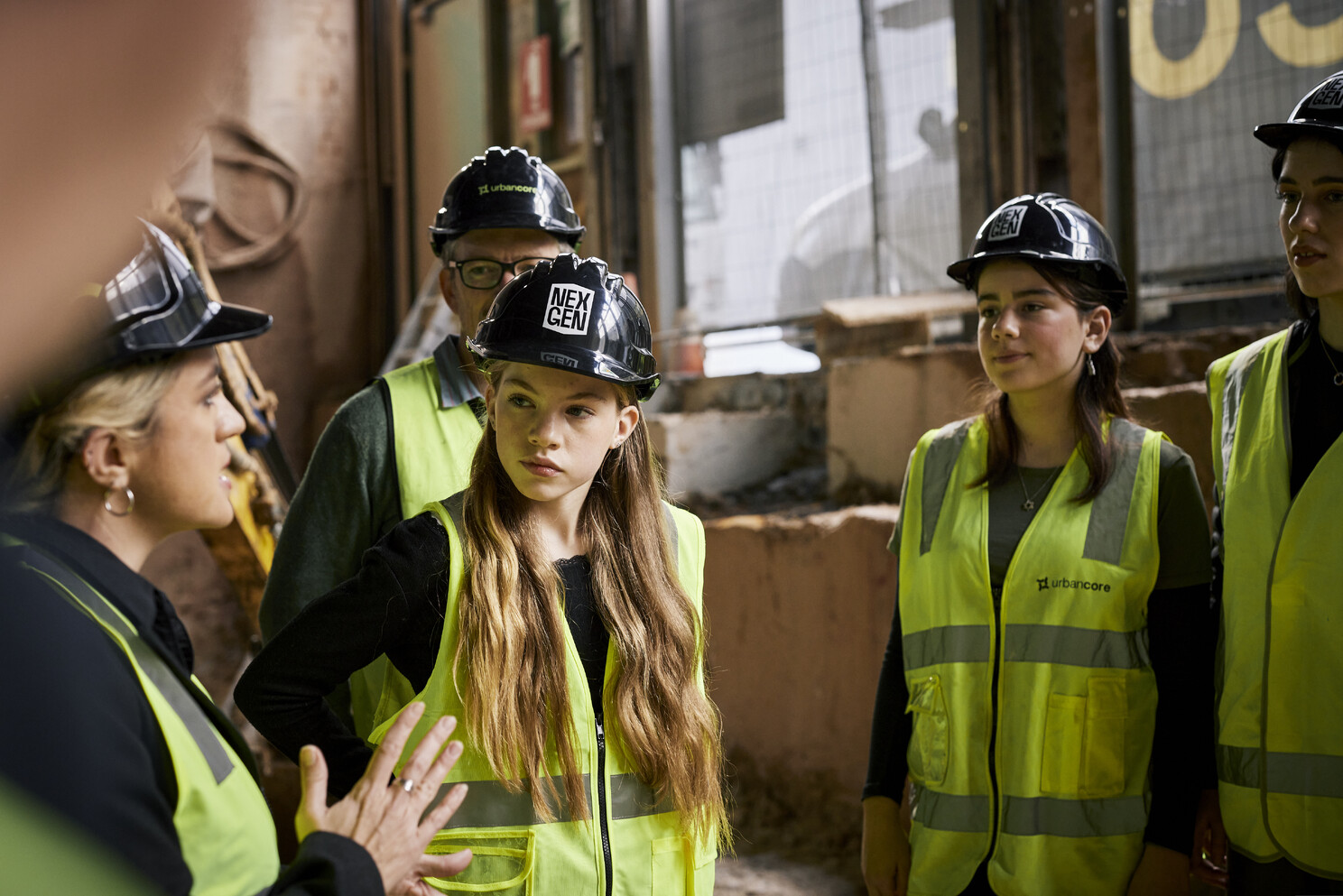
  • Founder of NexGen, a not-for-profit bringing real builders into schools to inspire the next generation
  • Advocates for visibility, not just representation — showing girls that construction needs them
  • Uses leadership to spark culture change, champion inclusive hiring, and normalise women on-site and in boardrooms
  • Passionate reader, disciplined learner, and student of leaders like Steve Jobs and Elon Musk
  • On a mission to prove diverse teams build stronger businesses — and better cities

“Back yourself—others might be able to back you, but you need to be your own backer first.”

In this feature, Dominique shares how she is flipping the script on construction, one blueprint at a time — and why building better begins with being bold.
Can you share your journey into the construction industry? What inspired you to pursue this career, and what is your current role?

I started my career as an architect but quickly evolved into project management for a tier-one construction company. I loved seeing buildings come out of the ground rather than designing them. I saw first-hand how difficult it was for women to have a successful career in construction, even though I genuinely loved my job. There were very few women I could look up to as role models in senior positions, and the corporate culture reflected that. I took the leap and started my own construction company eight years ago. I grew from a small fitout specialist in Sydney to a builder operating in three states, turning over $80 million annually. My current role is managing director of Urban Core.

What has been the biggest challenge you have faced as a woman in construction, and how have you successfully navigated it?

My biggest challenge at Urban Core was being taken seriously as a female-led builder, particularly in the early years. There have been times when my experience was questioned simply because of my gender or when I had to prove myself twice as much as my male counterparts. I turned that challenge into one of our most loved company values, antifragile. We are the underdog out to prove our worth, and we do it time and time again. I’m proud of how my team demonstrates this resilience – we share examples every fortnight at our national team meeting.

What do you think are the most significant barriers preventing more women from entering the construction industry, and how can ambassadors like yourself help break down these barriers?

The biggest barrier is the culture and perception of the industry. When discussing construction, everyone first thinks of heavy labouring on a dirty job site. But there are so many other roles. Our office has fantastic project managers, contract administrators and bid coordinators who all play critical roles in construction, but no one knows about them. Then, there’s awareness of how important construction is to a successful society and economy. I always speak to schoolchildren and explain that without construction, they wouldn’t even have a school, let alone hospitals, factories that make their phones, etc. Construction is essential!

As an ambassador, my focus is on changing the culture from the inside out. This means challenging outdated mindsets and pushing for policies that support women in the industry. When the culture shifts, the doors open wider for more women to step in, thrive, and lead.

What strategies do you use to make your voice heard among the few women on worksites or in meetings?

The best way to ensure that women’s voices are heard is to encourage a culture that permits and encourages it. We need to normalise the idea that construction is better off with a balance of female and male voices – it’s really about diverse viewpoints on solving problems and achieving the best outcome. I always tell people we are creating buildings for people of all genders and backgrounds. It doesn’t make sense that men only design and build them.

What actions or initiatives would you suggest to create more inclusive spaces for women in the construction industry?

To create more inclusive spaces for women in the construction industry, it is essential to establish stronger recruitment pathways that actively attract women into the field. This can be achieved by targeting schools and universities, encouraging young women to explore careers in construction, and providing them with clear entry points into the industry. This is precisely the mission of NexGen, which is designed to foster interest and create opportunities for the next generation of women in construction.

A cultural shift is also necessary to ensure that outdated attitudes no longer hold women back. The industry must adopt a zero-tolerance approach to behaviours and mindsets that discourage or exclude women, fostering a workplace environment where diversity is valued and everyone has equal opportunities to thrive.

“Don’t shrink yourself to fit in; expand to stand out.” - Dominique Gill

Do you believe ambassadors are more prominent in today’s generation than 10 years ago? If so, how has this role evolved, and why is it significant in driving change?

The best way to bring about change in others is to show that change is possible. That’s why ambassadors are so important. You’re not talking about the possibility of women working in construction; an ambassador is living proof. I’m a huge advocate of ambassadors – it’s why I set up a not-for-profit NexGen. It brings construction workers into schools to talk to schoolchildren about the incredible work they do daily to create the environment where we live, work and play.

Ten years ago, advocacy was happening in smaller circles, like mentorship. With social media, public platforms, and government-backed initiatives, ambassadors have more influence than ever.

We’re not just part of the conversation; we’re leading it by influencing company cultures and inspiring the next generation of women in construction.

What impact do you hope to achieve through your role as a Women Building NSW Female Ambassador, and what legacy would you like to leave for future generations?

I’m building Urban Core to be more than just a construction company—it’s a blueprint for the industry’s future. I want to prove that a business can thrive while prioritising diversity, sustainability, and innovation. By creating a company where women are not the exception but the standard, we’re demonstrating that inclusive workplaces don’t just benefit individuals—they drive better projects, stronger teams, and a more resilient industry. If the company I’m creating helps pave the way for more women to enter, lead, and reshape this industry, I know I’ve made a lasting impact.

Who has been a key mentor or role model in your journey—male or female—and how have they influenced your career and leadership style?

I’ve been fortunate to have mentors—both men and women—who have shown me that great leadership isn’t about fitting in; it’s about standing out for the right reasons. One of the best lessons I’ve learned is never to be afraid to challenge the norm. My father always comes to mind; he was such a positive influence in my life because he unconditionally believed in me: “Any decision you make, as long as it’s YOUR decision, will be the right one”. I am lucky to have been born in a family where my abilities to succeed were never doubted, and I was also never under pressure to achieve anything in particular. I wish my father had lived to see Urban Core and where his mentorship got me today.

Can you share a formative experience that shaped your leadership vision and approach? How has this influenced your role as an ambassador in mentoring and supporting others?

A formative experience that shaped my leadership vision and approach has been my deep engagement with the biographies of great leaders, particularly Steve Jobs and Elon Musk. Jobs’ relentless pursuit of excellence, obsession with simplicity and sophistication, and ability to distil complexity into elegance have profoundly influenced my thoughts on leadership, innovation, and building something truly meaningful. I find myself repeatedly returning to that book, drawing lessons that continue to shape my approach.

Similarly, while Elon Musk is undoubtedly a divisive character, particularly in diversity, his ability to challenge the status quo and question everything is something I deeply admire. The world needs more of that relentless curiosity and refusal to accept limits. His story reinforces the importance of audacity in leadership, a mindset I bring daily to my work.

I take my reading seriously, treating it as a discipline and a tool for growth. I always read a physical copy, highlighting passages that resonate with me, and then reinforce those insights by listening to the audiobook while driving or running. Beyond that, I go a step further—writing out entire book passages in my journal and referencing them in meetings or correspondence whenever they provide clarity or inspiration.

This dedication to continuous learning and reflection has shaped my role as a mentor and ambassador. I see leadership as a responsibility to push boundaries and help others do the same. Whether through direct mentorship, strategic guidance, or simply sharing the right insight at the right moment, I strive to create an environment where questioning, learning, and excellence are embedded in everything we do.

What milestones has the construction industry achieved in advancing gender equality, and what initiatives or changes would you like to see to make it more inclusive and welcoming for women?

The construction industry has made significant progress in advancing gender equality, with more women in leadership roles than ever. Diversity is now being discussed meaningfully, and companies are beginning to recognise the value of inclusive workplaces. However, actual progress requires more than just representation—it demands that women hold key decision-making positions where they can actively shape the industry’s future.

To make construction more inclusive and welcoming for women, we need initiatives that provide mentorship, leadership training, and sponsorship opportunities. Companies must also address systemic barriers, such as outdated policies and unconscious biases, while fostering a workplace culture prioritising flexibility, safety, and respect. Real change will come when gender diversity is no longer just a conversation but an integral part of the industry’s operations.

What is your advice for women considering a career in construction, and how can ambassadors like yourself help make their journey smoother?

My advice to women considering a career in construction is simple: back yourself—others might be able to back you, but you need to be your own backer first. Confidence is key in an industry with barriers to break, so trust in your skills, speak up, and take up space. Surround yourself with mentors and allies who genuinely support your growth, whether they are within your company, industry networks, or broader professional circles. Having the right people in your corner makes all the difference.

Most importantly, own your space—don’t shrink yourself to fit in; expand to stand out. The industry needs fresh perspectives, and your voice matters. As ambassadors, we are responsible for smoothing the path for others by creating opportunities, advocating for change, and ensuring that workplaces are truly inclusive. And above all, always remember this: you belong here.